What is Transfer Pricing in Mexico?
Transfer Pricing in Mexico is defined as one of the regulations and controls that has gained greater relevance in recent years internationally, stemming from the pressure by G20 member countries, as well as the Organisation for Economic Co-operation and Development (OECD), to close tax loopholes and prevent the erosion of the tax base and the shifting of profits by multinational business groups.
Transfer Pricing regulations in Mexico and internationally have allowed tax authorities to establish standardized reporting and documentation controls to monitor and evaluate the intercompany relationships among the members of a multinational business group.
Mexico was one of the countries with the longest experience and history in implementing Transfer Pricing regulations within Latin America, starting with the introduction of the Arm's Length Principle concept. Now, after understanding what transfer prices consist of, their objectives can be understood more clearly.
Who is required to submit a Transfer Pricing study in Mexico?
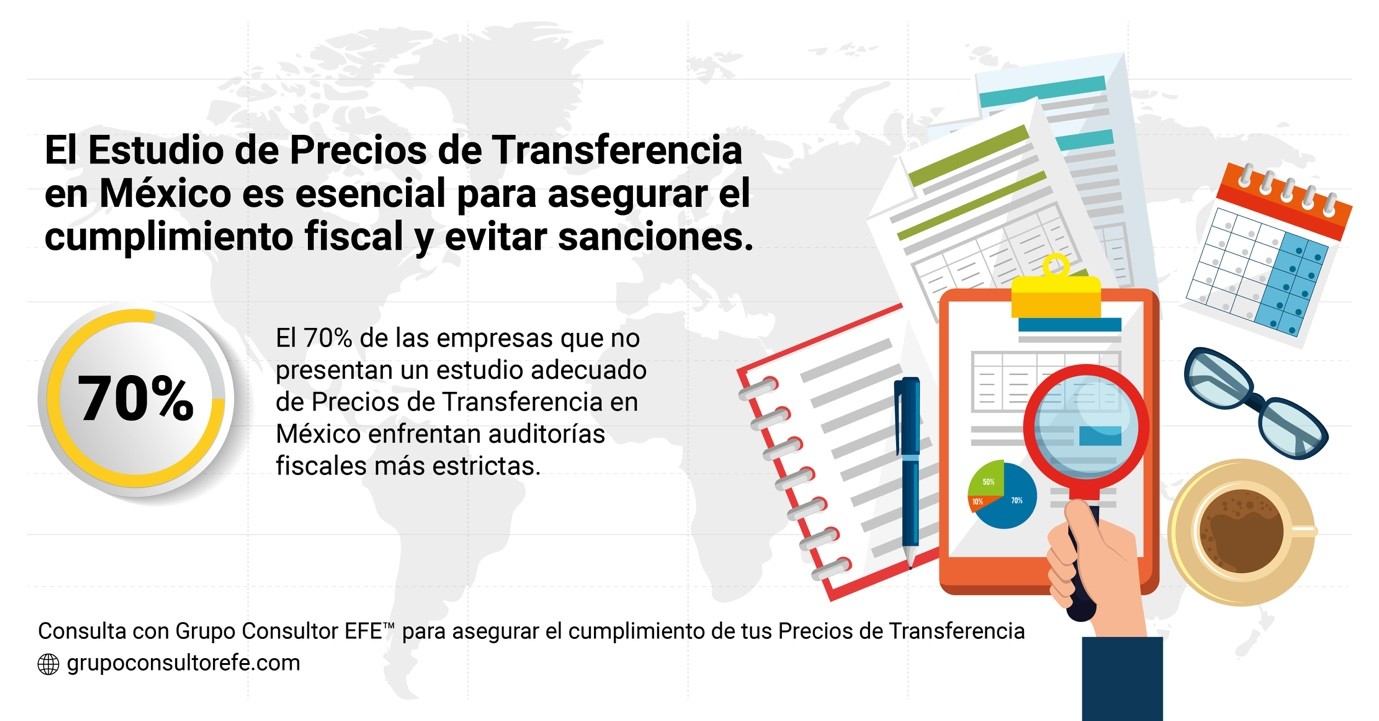
In Mexico, companies and individuals (personas físicas) that carry out transactions with related parties, both domestic and foreign, must comply with the preparation and conservation of Transfer Pricing studies. Those obligated to comply with Transfer Pricing are taxpayers who perform intercompany transactions subject to the Arm's Length Principle. This obligation applies to those taxpayers whose income exceeds certain limits established by the Income Tax Law (LISR). Companies with income greater than certain limits must file a Transfer Pricing declaration as part of their tax obligations.
Legal entities (personas morales) and individuals (personas físicas) must demonstrate, through supporting documentation, that their transactions comply with local tax regulations and avoid penalties for non-compliance.
Expert Perspective: Transfer Pricing Studies as a Strategic Tool
According to Felipe Augusto Mora Martínez, Director of the Transfer Pricing area at Grupo Consultor EFE™, transfer pricing studies should not be seen solely as a tax requirement, but as a key strategic tool for improving business profitability and competitiveness.
"If used intelligently, these studies can help optimize business operations and improve key decision-making. For example, these analyses allow us to evaluate how income and costs are generated within a business group. This can reveal opportunities to adjust margins, redistribute resources, or rethink strategies that make the operation more efficient," explained Mora Martínez.
Furthermore, he highlighted that these studies are essential for identifying which parts of the business generate real value and ensuring those areas operate at their maximum capacity. They are also useful for simplifying functions or centralizing important activities, such as intangible asset management, which not only improves business performance but also opens the door to legitimate tax benefits.
"A well-founded study prepares companies to face regulatory or economic changes, allowing pricing policies to adapt quickly. That flexibility, in an increasingly scrutinized world, translates into a competitive advantage," he added.
In summary, Felipe Mora Martínez concludes that transfer pricing is much more than a formality: "It's an opportunity to align the tax strategy with operational objectives and maximize business resources."

Legislation in Mexico
Transfer Pricing Regulatory Laws in Mexico
Transfer Pricing regulation in Mexico is established in Article 76, sections IX, X, and XII, as well as in Articles 179 and 180 of the Income Tax Law ("LISR"). Sections IX and XII of Article 76 establish that legal entities (personas morales) must obtain and preserve the supporting documentation that demonstrates that transactions carried out with related parties are at market value. In the case of taxpayers who perform business activities, they will be obligated when their accumulated income in the immediate prior fiscal year has exceeded 13 million Mexican pesos. For those taxpayers whose accumulated income derives from professional services, they will be obligated when their income in the immediate prior fiscal year exceeds 3 million Mexican pesos.
Furthermore, individuals (personas físicas) are obligated to agree upon their income and expense transactions with domestic and foreign related parties at market value, as established in the penultimate paragraph of Article 90 of the LISR.
Finally, Article 76-A establishes the obligation to file the Local, Master, and Country-by-Country informational returns for those taxpayers indicated in Articles 32-A, second paragraph, and 32-H, sections I, II, III, IV, and VI of the Federal Tax Code (Código Fiscal de la Federación) who enter into transactions with related parties.
Definition of Related Party in Mexico
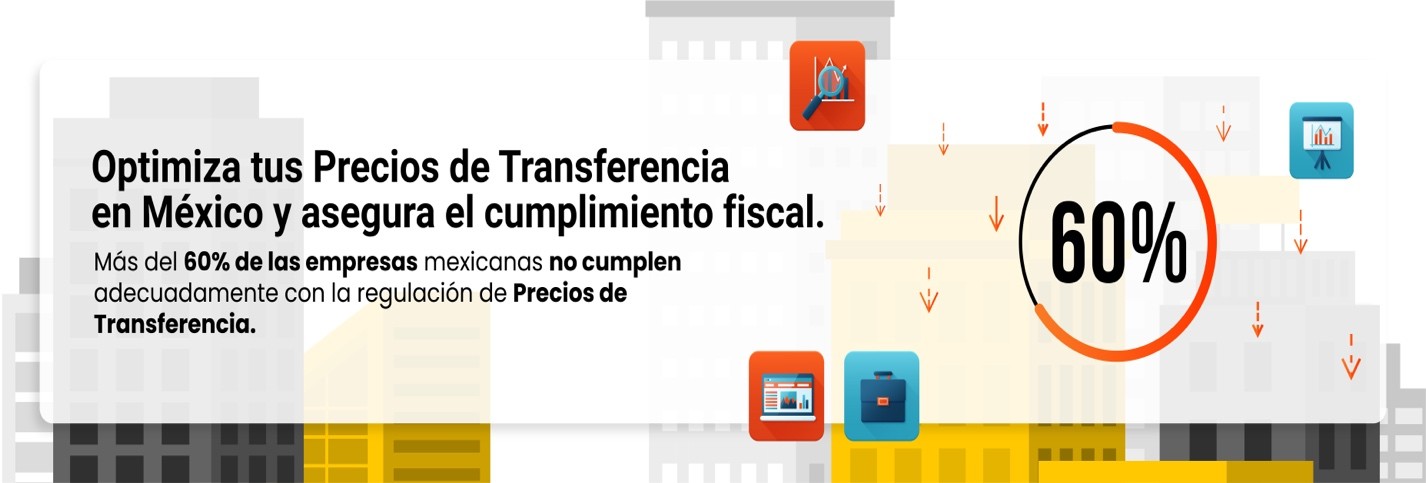
Article 179 of the LISR (Income Tax Law) considers two or more people to be related when one participates directly or indirectly in the administration, control, or capital of the other, or when one person or group of people participates directly or indirectly in the administration, control, or capital of both persons.
In the case of joint ventures (asociaciones en participación), the following are considered related parties:
- All its members.
- The people who are related parties of any of those members.
Likewise, for a permanent establishment, its related parties include:
- The head office.
- Other permanent establishments of the same head office.
Additionally, unless proven otherwise, transactions between residents in Mexico and companies or entities subject to preferential tax regimes are considered to be carried out between related parties when the prices and amounts of consideration are not agreed upon according to those that would have been used by independent parties in comparable transactions.
In the case of individuals (personas físicas), the last paragraph of Article 90 of the LISR states that related parties are considered to exist when:
- One person participates, directly or indirectly, in the administration, control, or capital of another.
- The same individual or group of people participates, directly or indirectly, in the administration, control, or capital of both.
- There is a link between them according to customs legislation.
Article 68 of the Customs Legislation considers that a link exists between people in the following cases:
- If one individual holds management or responsible positions in a company of the other.
- If they are legally recognized as business associates.
- If they have an employer and employee relationship.
- If one person directly or indirectly owns, controls, or possesses 5% or more of the shares, partnership interests, contributions, or outstanding voting securities in both.
- If one of them directly or indirectly controls the other.
- If both persons are controlled directly or indirectly by a third person.
- If together they directly or indirectly control a third person.
- If they are of the same family.

Penalties for Non-Compliance with Transfer Pricing in Mexico
Penalties for failure to comply with transfer pricing regulations are established in the Federal Tax Code (CFF). The penalties included in this code contemplate generic fines and specific fines for the breach of transfer pricing obligations, among which we find:
Documentation and Disclosure Requirements in Mexico
DON'T MISS OUT: DOWNLOAD OUR TRANSFER PRICING COMPLIANCE ROADMAP NOW!
MEXICO - APPLICABLE TO THE 2023 FISCAL YEAR
Avoid fines and penalties for non-compliance.

Transfer Pricing Related Filings
Regarding filing obligations, there are several transfer pricing related filings that must be considered when determining a taxpayer's obligations. Below is a summary and description of these filings:
- BEPS Informational Returns (Declaraciones Informativas BEPS): Article 76-A of the LISR (Income Tax Law) states that taxpayers who carry out transactions with related parties residing abroad must provide the tax authorities, no later than December 31st of the year immediately following the relevant fiscal year, with the following related party informational returns:
- Master Informational Return of the Multinational Business Group (Declaración informativa maestra de partes relacionadas del grupo empresarial multinacional): This filing must contain the organizational structure of the taxpayer's multinational group, a description of the activities of the companies forming the group, a description of the group's intangible assets, financial activities with related parties, as well as the financial and tax situation of the group's companies. The master transfer pricing report must be attached to this filing in PDF format.
- Local Informational Return of Related Parties (Declaración informativa local de partes relacionadas): This must contain a description of the organizational structure, strategic and business activities, as well as its transactions with related parties. Additionally, it must include the financial information of the obligated taxpayer and of the transactions or companies used as comparables in its analyses. The taxpayer's local report must be attached to this filing in PDF format.
- Country-by-Country Informational Return of the Multinational Business Group (Declaración informativa país por país del grupo empresarial multinacional): This must include information at the tax jurisdiction level regarding the worldwide distribution of income and taxes paid, indicators of the location of economic activities in the tax jurisdictions where the multinational business group operates during the corresponding fiscal year, and, additionally, a list of all member entities of the multinational business group.
It is important to mention that the Country-by-Country informational return must be filed by taxpayers when they fall into one of the following two scenarios:
- They are multinational controlling legal entities (personas morales controladoras multinacionales), understood as those that meet the following requirements:
- They are residents in Mexico.
- They have subsidiary companies defined under financial reporting standards, or permanent establishments residing or located abroad, as the case may be.
- They are not subsidiaries of another company resident abroad.
- They are obliged to prepare, file, and disclose consolidated financial statements in accordance with financial reporting standards.
- They report consolidated results of entities residing in one or more other countries or jurisdictions in their consolidated financial statements.
- They have obtained consolidated income for accounting purposes equivalent to or greater than 12 billion Mexican pesos in the immediate prior fiscal year.
- They are legal entities (personas morales) resident in Mexico or residents abroad with a permanent establishment in the country that have been designated by the controlling legal entity of the multinational business group residing abroad as responsible for providing the Country-by-Country informational return referred to in this section.
To know all the details about the requirements for the different transfer pricing reports, you can consult our article Transfer Pricing Documentation in Mexico.

Supporting Documentation (Study) in Mexico
In accordance with sections IX and XII of Article 76, supplemented by the provisions of Article 179, numeral 1 of the Income Tax Law (LISR), taxpayers who carry out transactions with related parties residing abroad, as well as those residing in national territory, must obtain and conserve the supporting documentation that demonstrates that their accrued income and authorized deductions were agreed upon by considering, for those transactions, the prices and amounts of consideration that would have been used with or between independent parties in comparable transactions.
Exempted Taxpayers
As established in the second paragraph of section IX of Article 76, the following taxpayers shall be exempt from obtaining and conserving supporting documentation regarding transfer pricing when they have carried out transactions with related parties residing abroad:
- Those who have conducted business activities whose income did not exceed $13,000,000 pesos during the immediate preceding fiscal year; or
- Those who have provided professional services whose income did not exceed $3,000,000 pesos during the immediate preceding fiscal year.
It is important to clarify that taxpayers who carry out transactions with companies established in preferential tax regimes and those who act as contractors or assignees under the Hydrocarbons Revenue Law shall not be exempt from this obligation.
Safeguarding the Transfer Pricing Study in Mexico
Article 30 of the Federal Tax Code ("CFF") establishes that taxpayers must keep their documentation for a period of five years.
Language of Documentation in Mexico
Article 33, section B, fraction XI of the CFF Regulations establishes that the taxpayer's supporting documentation must be in Spanish and the values recorded in national currency (Mexican Pesos).
Small and Medium-Sized Enterprises (SMEs) in Mexico
Mexican legislation excludes those legal entities (personas morales) from the obligation to prepare a transfer pricing study if their income in the immediate prior fiscal year did not exceed $13 million pesos for business activities, and those whose income did not exceed $3 million pesos for professional services.
Deadline to Prepare Documentation in Mexico
There is no official deadline in Mexico to prepare the transfer pricing documentation. However, it is recommended that it be prepared before the annual return for the analyzed fiscal year is filed, or before the tax opinion (dictamen fiscal) is submitted. This aims to minimize subsequent risks of adjustments to the consideration agreed upon between related parties.
Deadline to Submit Documentation in Mexico
Regarding the transfer pricing study or documentation, it must be conserved by the taxpayer and made available to the Tax Administration when requested through written communication for review or audit purposes.
The Local Informational Return of Related Parties must be filed no later than May 15th of the fiscal year immediately following the analyzed one. Meanwhile, the Master Informational Return of Related Parties must be filed by the obligated parties no later than December 31st of the year immediately following the relevant fiscal year.
Statute of Limitations in Mexico
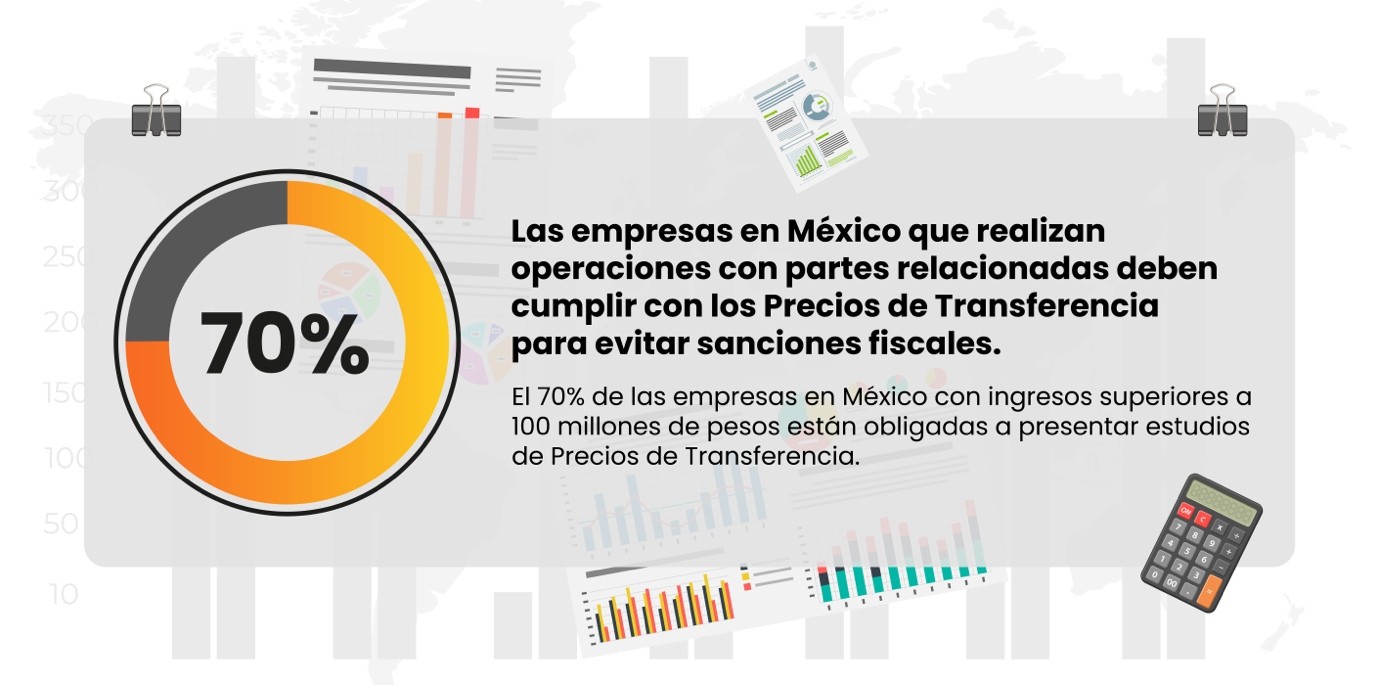
The statute of limitations period for reviewing information is five years.
Transfer Pricing Methods in Mexico
Article 180 of the LISR establishes that the determination of the price that independent parties would have agreed upon in comparable transactions may be carried out by applying any of the following accepted methods:
- Comparable Uncontrolled Price Method (CUP);
- Resale Price Method (RPM);
- Cost Plus Method (CPM);
- Profit Split Method (PSM);
- Residual Profit Split Method (RPSM); and
- Transactional Net Margin Method (TNMM).
For the application of these methods, taxpayers must select them in a prelative manner (following a hierarchical order).
Take your knowledge about the best transfer pricing methods and practices to another level with the help of our definitive guide on transfer pricing methods.
Comparables in Mexico
Article 179 of the LISR establishes the criteria that must be considered when searching for and selecting comparable transactions for a transfer pricing analysis. These are:
- The specific characteristics of the transactions;
- The functions, assets, and risks assumed by the parties involved in the analyzed transaction;
- The actual contractual terms, taking into account the responsibilities, risks, and benefits of the parties;
- The economic circumstances;
- The business strategies, including relationships with market penetration, permanence, and expansion.
The legislation does not specify the taxpayer's ability to select foreign comparables, or the priority of these over domestic comparables or vice versa. However, Article 179 does mention that the OECD Transfer Pricing Guidelines for Multinational Enterprises and Tax Administrations are applicable for the interpretation of the article. These guidelines establish in Chapter III, paragraph 3.35, that it is possible to select foreign companies as comparables, without specifying any priority of one over the other in the choice solely based on their geographical origin.
It is relevant to mention that starting from the 2022 fiscal year, Article 179 of the LISR establishes that the financial information of the selected comparable companies from the contemporaneous fiscal year to the taxpayer's fiscal year under analysis must be used. Information from more than one fiscal year can only be used when it can be demonstrated that the acceptance or demand cycle for the taxpayer's products or services is greater than 12 months.
At Grupo Consultor EFE™, we understand the importance of complying with tax regulations while simultaneously optimizing your company's financial resources. With a track record of more than 1,200 annual studies and the trust of over 600 clients, we are consolidated as your strategic ally in transfer pricing compliance.
Our experience, proprietary methodology, and commitment to excellence position us as the leading firm in Mexico to address the fiscal needs of local and international business groups.
Trust us to protect your operation, ensure tax compliance, and strengthen your business competitiveness.
.svg)